Wednesday, August 1, 2018

The Invitation

Christ Church Park, An Underperforming Asset


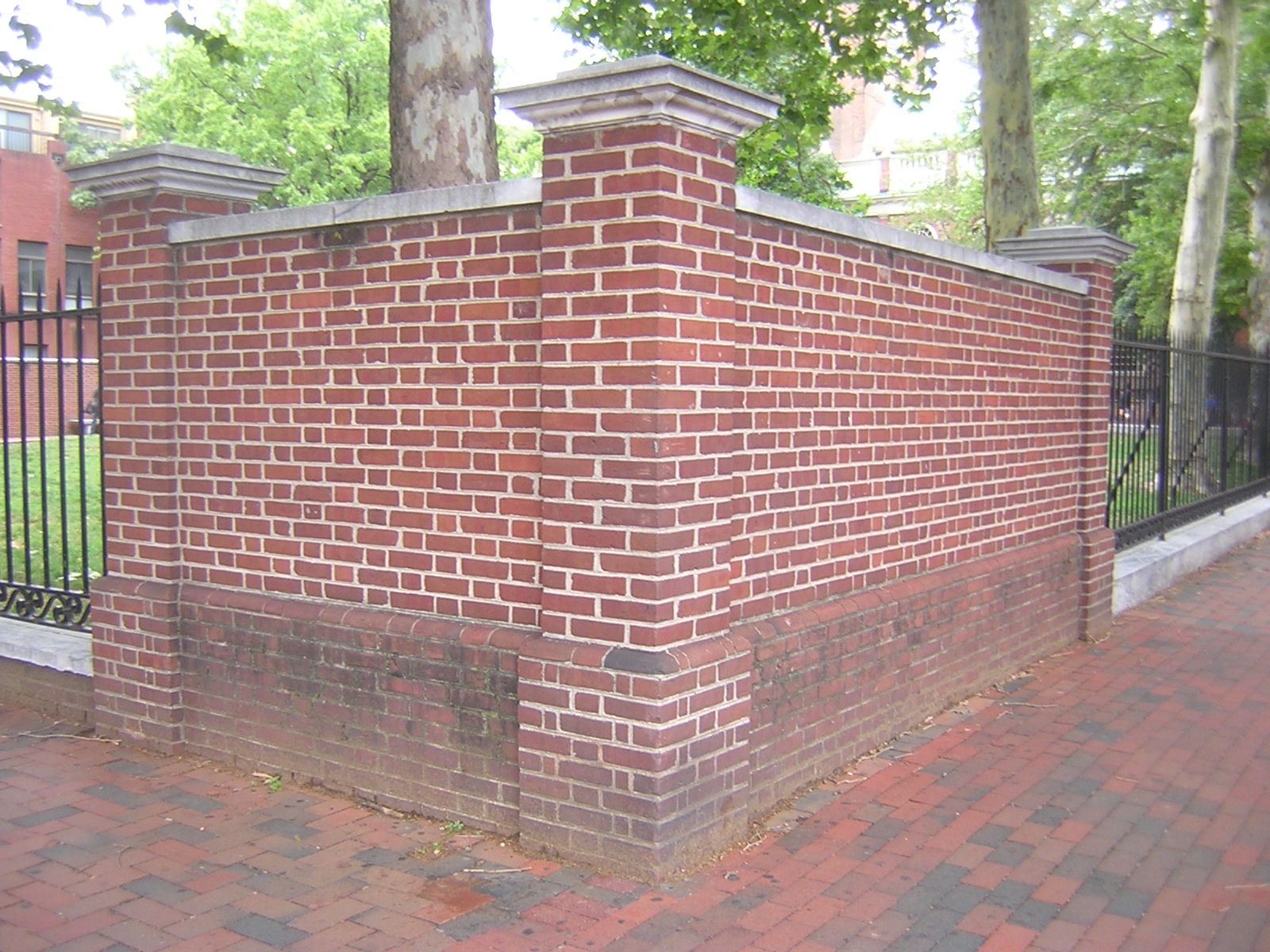
The corner of Second and Market. No gate.

So maybe we should ask people to come into the park. Just a thought. It's a nice park - I've often admired it walking by, on either Market or Second, on my way to somewhere else. I've hardly ever gone inside the park, and when I have I wasn't quite sure what to do there.

Let's face it: I've been coddled by Rittenhouse Square, where there are benches, other people, yadayada. Oh, yes, and there are ways into Rittenhouse Square.

How do you get into Christ Church Park? It's almost a secret. Is there an entrance at or near the corner of Second and Market? No. Think about Rittenhouse Square and the corner of 18th and Walnut, with massive quantities of pedestrian commuters in the morning and evening rush, bike messengers hanging out all day, socializing and waiting for their next call, various solicitors for religious, political, and other causes. The occasional odor of marijuana. Nothing like this happens at Second and Market. There's no gate there, you know.

Gate on Market Street, recessed in midblock.

There are two entrances to Christ Church Park, and frankly they're almost hidden. There's one on Market in the midblock, at the southwest corner of the park. The other one is at the northwest corner of the park, near the entrance to Christ Church. The two gates are connected by a brick walkway, the only path in the park.

The Market Street gate and the walkway.


Gate on Church Street.

Urbanist Jan Gehl likes to talk about the invitation. If you want people to come into your park, you need to invite them in. (See Jan Gehl, Cities for People, 2010, pp. 15, 17, 21, 236-237.)

View from Church Street gate, Christ Church across the street.

Okay, so let's assume you're in Christ Church park. What do you do then? Good question.

I'm a simple guy. My main park activity is hanging out. I don't need rope courses or zip lines. A place to sit would be nice. The park currently has five stone benches strung along the walkway. They do not have backs or armrests, but they are backed by a brick wall. Here's a picture.

Four of the five stone benches. The walkway. The brick wall.

Behind the brick wall, by the way, is a parking lot. It is virtually invisible. I wish all the parking lots in Philadelphia were as demure as this.

This parking lot is on line with American Street. 

Given the configuration of the park as essentially a pilgrim's path to the church, it is perhaps not surprising that park utilization leaves something to be desired. Dog-owners walk their dogs here, and even that has its ins and outs. This is a National Park Service park, and the Park Service requires dogs to be on-leash at all times. It's in the Code of Federal Regulations:  36 CFR Chapter 1, Section 2.15(a)(2).

Reimagining the Park
I picked up these tidbits at a July 18 meeting in Christ Church's Neighborhood House, next door to the church itself. On the fourth floor, in an auditorium that used to be a gym (there are still basketball-court markings on the floor), I watched and listened as various speakers discussed various aspects of the park.

All this gabbing was in service of a project sponsored by the Old City District: Reimagining the park at Second and Market Street.

Ideas? Yes, I Have a Few
Here are a couple of ideas off the top of my head.

My top priority. Figure out how to get little kids and their moms and dads into the park. You definitely want them in the mix of park users. They bring a whole new and very positive vibe.

Just look at the statue of Billy the Goat in Rittenhouse Square. The goat is the center of a seating area largely but not exclusively occupied by small children and their parents. This place is so popular with kids that, after a century, a literally worn-down Billy is retiring to a nice pasture across the street in the Philadelphia City Institute Library. He will be replaced by Billy Jr., an exact replica.

Second idea. Plan for a mix of uses. In The Death and Life of Great American Cities (pp. 96-97), Jane Jacobs explains the secret of Rittenhouse Square's success. Because it borders a residential district and a commercial district, the park draws different people at different times of day. Aside from small children and their parents, and the old people who like to sit on benches and watch them, you have pale-faced office workers who come to get some sun and exercise while walking on the park's ring path. The benches welcome people eating takeout lunches.

I could go on, but you get the idea.

So here are some physical changes that would undoubtedly make Christ Church Park more popular.

- More gates, better placed.

- Diagonal paths. These would encourage people to shortcut through the park. A valid use to my mind (I certainly do it a lot myself), and some of the people passing through may sit down for a few minutes, rest their feet, and look around.

- A water feature. Philly has lots of great water features, none better in my estimation than the two at Sister Cities Park by Logan Square (talk about child magnets). I personally think the water feature at Christ Church should include a watering trough for horses.

- Interpretive plaques. And here's why we should have a horse trough. Somebody needs to step up and educate tourists and locals about the history of the nineteenth-century city they are standing in the middle of. Explaining to people what a horse trough is could be a good place to start.

Why All the Low-Hanging Fruit?
As I learned at the information session, Christ Church Park is a child of the 1960s. The Park Service wanted to create a view shed for the church, so it pulled down the buildings where the park now is and created a very pretty space that would allow tourists to stand at Market Street, where the sidewalk has been widened and a raised planting bed with low walls appropriate for seating has been provided. (These walls currently sport a don't-sit-on-me rail running along the top.) Tourists could view Christ Church from a distance and then possibly walk on the walkway at the west side of the park to view the church exterior close-up and possibly even go inside the front door, just a few feet from the park's northern gate. Any other uses by pedestrians do not seem to have been in the program.

That's simply how people were thinking then. Take Mies van der Rohe's iconic Seagram Building, on Park Avenue in Manhattan. A product of the 1950s, it stands in magnificent isolation behind a very effective view-shed plaza. Later on, people did get the idea that maybe there should be, you know, people in the plazas, but in the beginning it was definitely look but don't touch. It might be a step too far to say that the only pedestrians welcome were architectural photographers. Or it might not be a step too far.

The view of Christ Church from Market could actually be improved by lowering the fence. New York City's parks department has a program called Parks Without Borders; it does advocate in certain situations for taking down fences entirely. I wouldn't do that here because I think the moms and dads will want some perimeter definition to help keep their little ones from wandering out into the middle of Market Street.

Learning from Love Park
Part of Old City District's reimagining process will be looking at ways to further civilize the streets adjacent to the park.

I watched this mission civilisatrice (as the French would call it) fail at Love Park. I love the new Love Park itself, but nothing was done about the surrounding streets despite promises and hints.

I'm still angry about Love Park, but I'm working resolutely to set that anger aside and focus on the opportunities presented by Christ Church Park. I think, with a little help from well-meaning people, the park could raise its game significantly without spending a lot of money.

There's an open design workshop at the park Wednesday, August 8, from 2 to 7 p.m. The workshop will be at the farmer's market, which is next to the church.

There is naturally a page on the Old City District's website. Linked from the page are a survey and the slide deck from the July 18 presentation. Click here to view.

See Do We Secretly Want Ugly Cities and Dangerous Streets? Also Road Diet by Love Park - a Natural Experiment.

Monday, July 16, 2018

An Inflection Point


I could feel some tectonic plates shifting after the meeting in Helsinki between Putin and Trump. Some are calling Trump a traitor, which in my opinion is probably true. Others are asking what actually went on behind closed doors for two hours, since Trump is well known to have an attention span of about 18 seconds. The idea of him carrying on a sustained conversation for two hours with no aides to prompt him is laughable. So there will be the inevitable jokes about the Putin-Trump tryst. Was there spanking? Were there whips?

All of this is amusing, but I think it's not the main point. And I don't think that Trump's childishness or his petulance are the main point.

I think the main point is that Trump showed weakness. His painfully servile performance can be indicative of a number of things. Perhaps there really are pee tapes. More likely, the Russians have been financing Trump for many years, after the New York banks gave up on him, and so the Russians have the ability to ruin him financially, politically, any way you wish to name.

But we live in a world of carnivores. Putin is not alone. There's an old line about never showing weakness to a wild animal, because when the wild animal senses weakness, it automatically attacks.

The wild animal Trump needs to fear, more than Putin, is the American people. Right or left, we see ourselves as a great power, and when questions arise about what Mr. Trump was doing on his knees in front of Mr. Putin for two hours, I think the worm may just turn.

See also Bannon and Co. Aren't Very Good at Being Evil, Fascism, What Can Pierre Laval Tell Us About Donald Trump?

Monday, July 9, 2018

Second and Chestnut


200 block of Chestnut, the interesting side.

As regular readers probably know, I get to Tuesdays with Toomey as often as I can. Which is pretty often. Our venue, at Second and Chestnut, is on the southern border of Philadelphia's Old City, and I've fallen in love with it.

You may also know that I'm fond of color in buildings, and as the picture above shows, there's quite a bit of color in the architecture of Old City.

Here's a picture of what our meetings are like.

Tuesdays with Toomey, June 5, 2018.

We've been meeting here since Toomey moved his office to the well-fortified Custom House in early 2017. Before that, he was up on JFK near the Comcast building, and those Comcast folks would come pouring out at lunchtime and join the rally. I once estimated our crowd at 700. Today, it's more like thirty, sometimes fifty. When John Fetterman showed up, we were over 100.

So the crowd is smaller, but guess what? The snowflakes didn't melt in the spring of 2017. We have persisted.

I'm not terribly fond of Pennsylvania's junior senator, but I am grateful to him for bringing me to this neighborhood. And, as a bonus, I'm quite certain that I will never, ever see him here.

I've had the opportunity, before and after our rallies, to wander around the neighborhood. In the 200 block of Chestnut there are two little streets, Strawberry and Bank, that run north to Market. And, if you're in the mood, you can do some time travel. But this is also a very modern, hip locale that is using its old bones well. Here's a view down Strawberry to the Custom House, where Toomey's office is.


And here's a shot north on Strawberry, showing the spire of Christ Church on the other side of Market.


Here's the view north on Bank.


Strawberry Court, Bank Street facade.


Okay, let's walk up Elbow Lane to Bodine Street and have a look at the beer garden there.

A different take on parking.

Strawberry Street and Trotters Alley. A parking lot and Second Street are reflected in the windows.


In the days before electricity, vault lights were used to let the sun shine in to basements, which typically extended under the sidewalk. Here's a vault light on Chestnut Street.


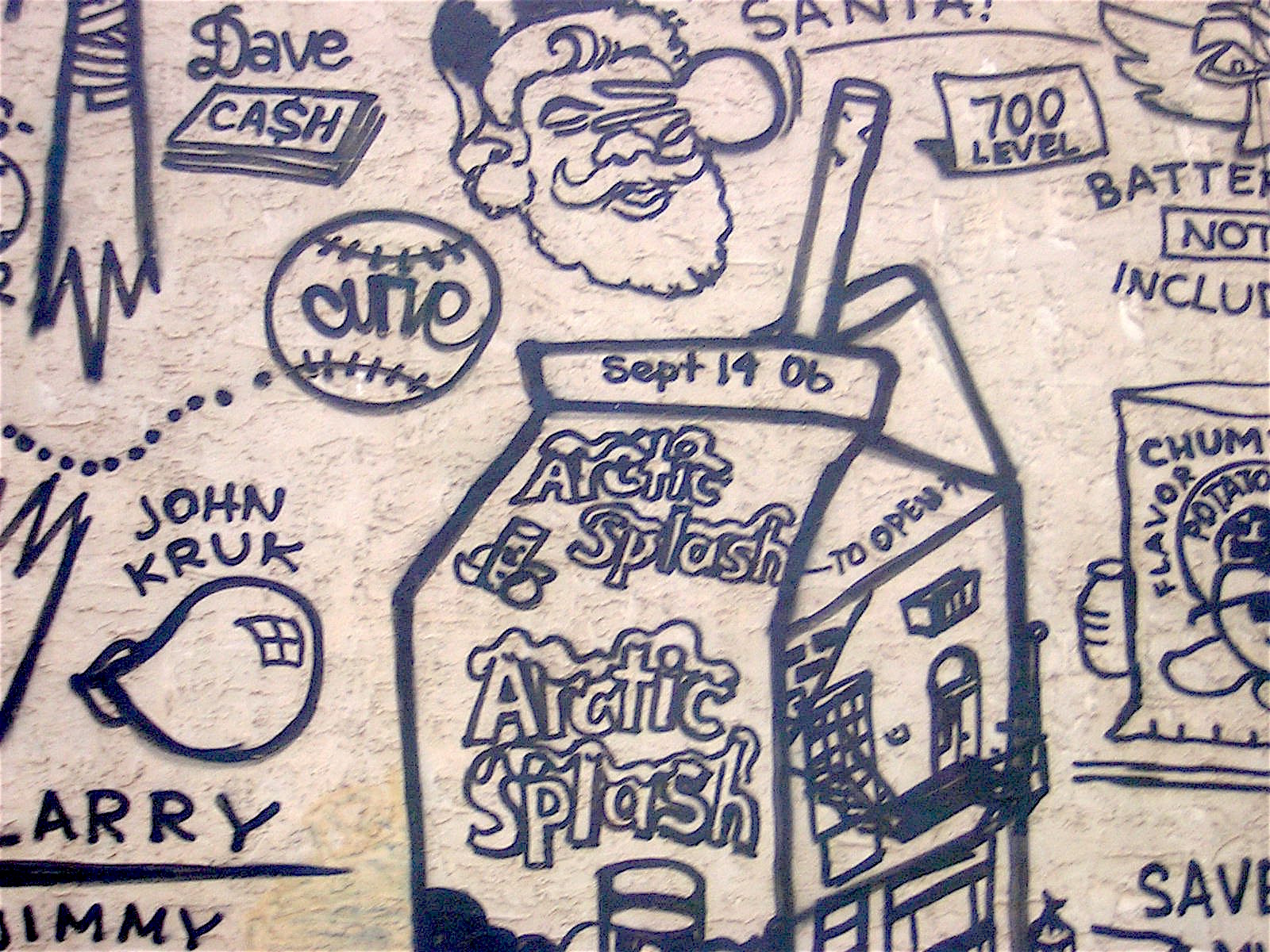
The shot below is for my friend Justin Coffin, who has been photographing real Arctic Splashes for years. The rendering here is part of a large and pleasantly incoherent mural on a wall that helps to define an utterly unremarkable parking lot.

Strawberry and Trotters Alley.

Sticking with the monochromatic approach, here's something I stumbled across in a little alley next to the Ritz garage. Aside from the poorly maintained Belgian block pavement, this was literally the only point of visual interest on the entire block. Calling Isaiah Zagar.

Ionic Street.

Back to color: How about some orange?  Here's the sidewall of the European Republic restaurant on Strawberry. Decent food.

Strawberry at Chestnut.

See also Senator Skedaddle, Senator Toomey Called My Son A Burnt-Down House, My New Favorite Alley.

Sunday, June 10, 2018

The Last Man Who Knew Everything

Joseph Leidy of Philadelphia


Joseph Leidy at the Academy of Natural Sciences.

Joseph Leidy (1823-1891) is best known as a pioneer in the study of dinosaurs. In 1868, he guided a team that erected "the first fully articulated dinosaur skeleton display in the world." The skeleton was put on display at the Academy of Natural Sciences of Philadelphia, which at the time was located on the northwest corner of Broad and Sansom, and it revolutionized the concept of a natural history museum.

In addition to attracting visitors to museums - lots of visitors - dinosaurs were also instrumental in getting people to think seriously about the then-novel concept of evolution. Charles Darwin's On the Origin of Species by Natural Selection had only appeared in 1859, and it would be an understatement to say that the guardians of received wisdom were not very receptive. Leidy, in a letter, wrote of the importance of dinosaur displays: "They break up old and rather fixed views about the world being created just as we now see it. Nothing tends so much to lead people to believe in the existence of former races of animals, as such restorations."

(See Robert McCracken Peck and Patricia Tyson Stroud, A Glorious Enterprise: the Academy of Natural Sciences of Philadelphia and the Making of American Science, Philadelphia, University of Pennsylvania Press, [2012], pp. 136-138, 140.)

Leidy was also a pioneer in the use of the microscope, which he called his "first love." His work in this area included parasites (he found the source of trichinosis in pork and later recommended more thorough cooking as a preventive measure) and his beloved rhizopods, tiny creatures some of whom are better known as amoebas, which he lovingly reproduced in illustrations that showed a very considerable artistic talent. (See Leonard Warren, Joseph Leidy, The Last Man Who Knew Everything, New Haven, Yale University Press [1998], pp. 65, 69, 166-169; and Henry Fairfield Osborn, Joseph Leidy 1823-1891, City of Washington, National Academy of Sciences, 1913, pp. 351-352. This last is available online.)

Leidy was probably the first in America to use the microscope in forensic medicine. Shortly after he graduated from medical school, the coroner of Philadelphia hired him as a part-time assistant coroner. It probably didn't hurt that the coroner was his cousin Napoleon B. Leidy. During his four years on the job (1845-1849) Joseph showed that nepotism could have an upside. In 1846 a farmer was murdered in north Philadelphia, and a day later a man was arrested because of the blood on his clothing and also on the hatchet he was carrying. This fellow would probably have benefited from watching a few noir movies, but of course movies hadn't been invented. Anyway, he claimed that the blood came from chickens he had killed. Leidy threw some samples under his microscope, and declared that he was not looking at chicken blood. The suspect, apparently lacking any plausible plan B, wound up confessing. (Warren, pp. 59, 72.)

But perhaps the thing about Leidy that most astonished his contemporaries, from students in the hallway to colleagues in the faculty lounge, was the simply amazing amount of stuff he knew about the natural world. From dinosaurs to clinical pathology, botany, zoology, rocks and gems, "if Leidy didn't know, no one knew," in the words of his biographer Warren (p. 192).

Leidy had a happy life and many friends, and he was a pillar of three major institutions in Philadelphia: Penn's medical school, the Academy of Natural Sciences, and the Wagner Free Institute of Science. He received the M.D. degree from Penn's medical school in 1844 and in 1853 was appointed professor of anatomy at the medical school, a position he held for nearly four decades. He also served as dean of the medical school, curator at the Academy of Natural Sciences and, in the 1880's, president of that institution,  and as president of the Wagner Free Institute. And he taught natural history at Swarthmore for many years.

It seems that just about everybody liked Leidy. The few who didn't like him seem to have been annoyed that, even though he was a really nice guy, you couldn't push him around.

Leidy was born at his parents' home, 312 North Third Street, which was conveniently next door to his father's hat store. In 1864 he married Anna Harden, daughter of the Reverend Robert Harden of Louisville, Kentucky. In 1876 the couple adopted Allwina Franck, the orphaned daughter of a Penn engineering professor. Leidy was raised as a Lutheran, but migrated in later years to Unitarianism. His funeral was held at Frank Furness's First Unitarian Church at 2125 Chestnut Street. (Warren, pp. 1, 143, 145-146, 221, 225.)

Leidy was a part of the western migration of Philadelphia during the nineteenth century. He grew up on Third Street, and in 1859 he purchased a house at 1302 Filbert Street, where he lived for many years. In the last year of his life he lived at 2125 Spruce. (Warren, pp. 19, 173, 221, 270.)

The Dr. Joseph Leidy House at 1319 Locust Street was the home of Dr. Joseph Leidy, Jr., who was Professor Leidy's nephew. It was built several years after Uncle Joseph died. Penn's online biography of Leidy gets this wrong in the last paragraph.

The site of the Filbert Street house later became part of the City Hall Annex, which is now a hotel. Across Filbert today is the city's criminal justice center.

Things obviously looked a bit different when Leidy was living there. For several decades he got to watch the construction of City Hall, a block away. Although the Reading Terminal was not built until after his death, there were markets on 12th Street before the Reading Terminal arrived.

A student who lived with the Leidys, Charles S. Dolley, tells us that Leidy "did most of the marketing and I frequently accompanied him to the 12th St. Market and carried home the basket of meat, fish or vegetables which he selected." At the time hucksters would also walk the streets, calling out their wares. Fresh crabs were frequently on offer in the summer, and when Leidy heard the soft-shelled crab men "crying 'crabs, crabs,' he would take some change from his pocket and say, 'Charlie, suppose you run down and get some crabs and a pitcher of beer from the corner saloon' - a very respectable place on the corner of 13th and Filbert - in fact, right next door. Then we would have a jolly snack." (Warren, pp. 143-145.)

Although not a great traveler, Leidy did get to Europe four times. And from time to time the world came to him. A Glorious Enterprise has a wonderful photograph on page 275 that shows Joseph Leidy standing with Edgar Allan Poe in the Academy of Natural Sciences at Broad and Sansom, during the winter of 1842-1843. The authors report that Poe spent time at the Academy researching mollusks; the photograph - a daguerrotype - is "the oldest known photograph of an American museum interior."

Much later in life, Leidy served on the committee at the University of Pennsylvania that supervised the work of Eadweard Muybridge, who was conducting photographic studies of human motion. (Warren, p. 240.)

While Leidy was slowly moving westward across Philadelphia, his two main employers were doing the same thing.

From 1751 to 1801, the University of Pennsylvania's college was located at Fourth and Arch. The medical school was founded in 1765 and located in Surgeons' Hall, on Fifth near Walnut.  (Because the site of Surgeons' Hall is in the Independence National Historical Park, there is a plaque.) In 1801 the college and the medical school moved to Ninth and Market, where they stayed until the move to West Philly in 1872.

The Academy of Natural Sciences held its first meeting in 1812, in a private residence near the northwest corner of Market and Second. It was soon renting a meeting space above a milliner's shop at 94 North Second Street, and in 1816 moved to purpose-built quarters on Arch between Front and Second. The building was presumably designed by William Strickland, who was on the building committee. In 1826 the members, moving the collections themselves, to save money, occupied a former Swedenborgian church (which was definitely designed by Strickland). This structure was located at 12th and George (now Sansom) streets. In 1840 the Academy continued its trek west, to Broad and Sansom, where it stayed until 1876, when it moved to its current location on Logan Square, at 19th and Race. (Peck and Stroud, pp. 2, 6, 13, 30, 32, 43, 144, 149, 154 fn. 69, 410.)

Warren (p. 207) says the Academy moved to Broad and Sansom in 1826. I believe he is mistaken.

Warren does have one significant criticism of Leidy. It's an interesting point, with which I happen not to agree, but it is well worth discussing.

Leidy lived at a time when modern science was really beginning to take off, with the experimental method becoming more and more important.  Leidy, though well aware of these developments, continued to work throughout his career in the more traditional vein of descriptive science. Warren thinks that Leidy should have jumped on the experimental bandwagon. (Warren, pp. 6, 41, 92, 105, 236, 252.)

(Think of Louis Pasteur saying, "Look at all those microbes in the fresh milk." And then saying, "I wonder what happens if we heat the milk." The first is observation. The second is the beginning of an experiment.)

I have several reactions. First, the idea of looking very carefully, and then reporting precisely what you have seen, lies at the base of modern science. Today we may take this approach for granted, but it was not always so.

For example, maggots seem to have the ability to appear out of nowhere. In reality, they come from very tiny eggs, and later in life they turn into flies. Leidy spent a good amount of his time, over the years, dealing with people who sincerely believed they had witnessed the spontaneous generation of life. (Warren, pp. 106, 116, 122, 130.)

Second, there is no guarantee that Leidy would have been half as good an experimenter as he was an observer, reporter, and illustrator. I'd say Leidy knew what he was good at, and he stuck to it. There's a really bad John Wayne movie from 1968 called Hellfighters, in which the veteran character actor Jay C. Flippen says to Katharine Ross, "Your father is the best there is at what he does. No man can walk away from that."

Third, observation continues to be in considerable demand even today. A recent article in the New York Times carries the title "The 8 Million Species We Don't Know." In it, the eminent entomologist Edward O. Wilson suggests that biodiversity is a good thing, estimates that there are currently 10 million species on the planet, of which only 2 million have been described, and argues that we can't save species if we don't know they're there.

If Joseph Leidy were alive today, his services would definitely be in demand. Eight million species to go. He'd be a happy man.


The statue of Leidy is by Samuel Murray (1870-1941). It was originally installed at the west front of City Hall in 1907 and moved to its present site in front of the Academy of Natural Sciences in 1929.

Monday, May 28, 2018

It's the Road Design, Stupid

Fiddling While Rome Burns

Emily Fredricks memorial, 11th and Spruce.

Death on our streets. Where does it come from? One school mutters about crazy bicyclists and obtuse pedestrians. Another school mutters about homicidal motorists.

And there's truth in all this muttering. People are human. They make mistakes, they act impulsively, and sometimes they act in anger.

But I fear the foibles of our common humanity are distracting us from the root cause of our problem: Our streets are not designed to kill, but they might as well be.

I've been studying the streets of Philadelphia for a number of years now. At some point it turned into a project - reimagining our streets. If I had my druthers, what would our public spaces look like? How would they function? It started as a personal project, but soon enough I found myself gravitating into the Vision Zero orbit.

Looking back, it seems stunningly obvious - to me, anyway - that safety should come first as a design principle. It turns out that this idea is actually controversial. Not that people come out in favor of death. Rather, they shift the conversation to other priorities - most notably, the need for speed.

This phenomenon of diversion and distraction is very common in our public discourse. There's always another shiny object for someone to toss into the air.

Council Plays Ping-Pong
Here's a recent example of politics as circus. Last year the Philadelphia Parking Authority was criticized for not doing enough to collect on old parking tickets. The PPA responded by dialing up the rate at which it was booting cars for unpaid tickets. The people expressed their unhappiness. City Council passed a parking amnesty, and a Council member got to take a star turn as a hero of the people.

A nice little game of ping-pong. Prod the PPA beast. When it stirs, shackle it. The people applaud. Take a bow. Makes you wonder if the whole thing wasn't a setup from the get-go.

The hot air of politics fills the sails of the ship of state. But if the ship doesn't also have adequate ballast in the form of thoughtful policy, it is likely to capsize in a strong wind.

An appropriate policy solution in this case might be to enact a statute of limitations on old parking tickets. Several people have suggested it, and it sounds like a good idea to me. Will it happen? I doubt it. Politicians are like movie moguls in that they love to recycle old ideas. Indiana Jones, Star Wars. How many sequels and prequels? Look for another parking amnesty in a few years.

Meanwhile, from an operational point of view, this whole kerfuffle never should have happened. The PPA is now even more distracted than usual from its basic mission of managing parking. Think about it: How does hounding people over 30-year-old parking tickets improve access at the curb today?

Zombies on the March
Love of the familiar, compounded by a very human resistance to new ideas, means that old ideas can remain powerful long after they have been thoroughly discredited. Some people call such ideas zombies - the walking dead.

Here's a zombie: parking minimums.

For many years, American zoning codes have commonly required a minimum number of parking spaces in or near new or heavily reworked buildings. Everything was official, and it certainly looked scientific, except that it wasn't.

In 2005, Professor Donald Shoup effectively blew the whistle on what he called "a precise, disciplined folly." The demolition had been going on for years, but with the 2005 publication of Shoup's book The High Cost of Free Parking, planners and elected officials no longer had an excuse to ignore the new thinking.

Shoup's demolition job is actually quite beautiful. I don't want to get into the weeds here, so I'll just skip a couple of hundred pages of data, statistical analysis, and closely reasoned argument laced with beautiful invective, and give you this: "Like alcohol prohibition in the 1920s, minimum parking requirements do more harm than good and should be repealed." (Donald Shoup, The High Cost of Free Parking, 2011 ed., p. xxxi. The "precise, disciplined folly" line is on p. 11.)

How It Played in Philly
So how did all of this play out in Philadelphia? Well, actually, we started off pretty well. In 2012, after a great deal of work, Philadelphia adopted a new zoning code that drastically reduced parking minimums. For multi-family dwellings the requirement, which had been one parking stall per dwelling unit (1/1) was reduced to three spots for every ten units (3/10).

In the Rittenhouse area of Philadelphia, where I live, the new law simply reflected the reality on the ground. Half of all households in the area don't own cars. In other parts of Center City the figure is higher - there is one area where 75 percent of households do not own a car.

You'd think this issue would be settled, but it's not. City Council is currently mulling not one but two bills that would push up the parking minimum for multi-family dwellings from three in ten (3/10) to six spaces for every ten dwelling units (6/10).

I honestly have no idea what we would do with all of those parking spaces. Storage closets, maybe.

It's my understanding that Council is reacting to complaints that curbside parking is very tight, which is certainly true in my Rittenhouse neighborhood. The Center City Residents' Association, which covers Rittenhouse, wrote a letter to Council opposing the proposed increase in parking minimums. CCRA noted that "it is not at all clear that mandating more parking space for multi-family housing will in any way reduce the shortage of on-street parking." It went on to suggest that as long as curbside parking is effectively free (a residential parking permit costs $35 per year), the curbs will be jammed. "Therefore," CCRA concluded, "if one purpose of the bill is to increase available street parking, a better way to achieve that goal might be to increase parking permit fees to market rates, thereby encouraging those using street parking to purchase vacant space in neighborhood lots."

To my mind, parking minimums are an intellectually bankrupt concept. I think it would be helpful if Council informed itself on the matter and possibly even came up with a comprehensive parking policy that looked at parking both on the street and off.

In fact, I would go even further. I've been looking at this subject for a number of years, and I'm not at all sure the parking problem is soluble in the context of a monomodal transportation system centered on the private automobile. I think we need to shift some basic assumptions, and start thinking seriously about what a balanced multimodal transportation system would look like, in broad outline and in fine detail.

Speed Kills
Life in the traffic lane suffers from the same dominance of bad old ideas that we have seen in the parking lane.

Since the very beginning of cars, there have been two problems that have defied solution - congestion and crashes. Starting in the 1920s, traffic engineers have used three main strategies to try to alleviate these problems. They have sorted incompatible types of traffic into separate spaces - most notably putting pedestrians on the sidewalk and giving the space between the curbs to motor vehicles. They have made more room for cars, shrinking sidewalks, fattening streets, and building new roads, most notably expressways and, later, interstate highways, that expressly prohibited any traffic other than motor vehicles. And they worked hard to increase the speed at which cars could travel on all these roads, both limited access highways and local streets. (For more on all this, see Peter D. Norton, Fighting Traffic, 2011.)

All three of these initiatives have had disastrous effects on the fabric of the city and on city life, and they have not resolved the issues of congestion and crashes.

So, once again, maybe it's time to accept the idea that the problem is insoluble as stated. Perhaps we should move away from the monomodal model, and get serious about a multimodal transportation system.

Something More
While we're at it, perhaps we can ask yet another question: What if a street can be not just a thoroughfare but also a public space?

Let's look at an individual block - 13th between Walnut and Chestnut. People complain about all the people sitting at tables on the sidewalk, eating and drinking and possibly even having a good time. And it's true they can get in the way of pedestrians, particularly those with strollers or in wheelchairs. The block could definitely be better organized, but the fixes are obvious and readily available.

To my mind, though, eliminating the outdoor restaurant seating should not be a part of the solution. The diners set a nice tone and vibe for the street, and it would be a poorer space without them.

And if you analyze the block as an outdoor room - a place to dwell for a time, rather than just a place to pass through on the way to somewhere else - perhaps you will come to the conclusion, as I have, that the diners are not interlopers. They belong there.

See also At Least It Makes People Laugh, Cars and Bikes - the Back StoryFinding Our Way to a Parking Policy, Parking: Storage v. AccessProfessor Shoup's Parking Book, Reimagining Our Streets, Why Are European and American Bicycling So Different?

Wednesday, May 16, 2018

A Certain Ramshackle Appearance


Who's in charge here?

Recently I've been having a look at the route of the old 23 trolley in Center City, mainly the southbound piece on 12th Street. And I've been having a number of thoughts. Including, who's in charge here? Have a look at these sign poles at 12th and Chestnut. Is there anyone who actually looks at this stuff and has the power to say, Wait a minute?

Don't get me wrong. In the modern world, I think we need more signs than they had years ago. For instance, the sign up on the building that says "Chestnut Street" is probably a bit subtle for today's world.

 It says Chestnut Street, if you can find it.

But do we, for instance, need two signs at Sansom Street telling us that we're at Sansom Street?

Trolley mast good. Second street sign bad.

I originally went to 12th Street, not to follow the trail of the trolley but to follow up on the news that, years ago, the Academy of Natural Sciences was located here - somewhere around 12th and Sansom. Good luck on finding any sign of that.

Once I was there I started looking around, and the archaeological remains of the 23 trolley are everywhere. I actually felt like getting a pith helmet so I'd look like some intrepid Englishman looking for dead Egyptians.

The most obvious remains are the tracks, of course. There's a long and tortured history. The tracks are a serious hazard for bicyclists. Motorists don't like them because a car tire on a rail acts like it's hit a patch of ice. Bicyclists have it worse; they can catch a wheel in the flange groove (or flangeway, if you want to be a stickler). At any rate, good things do not flow from that. After some unhappiness, the Philly Streets Department and Septa undertook to remove or pave over the rails at a bunch of intersections - these are the spots where bicyclists are most likely to "catch a crab," as rowers put it.

Disabled track, Sansom St. Filling the groove with asphalt helps.

That still leaves a bunch of track out there, and frankly a lot of it is not in very good shape. There are those who still are waiting for the 23 trolley service to be restored, and I like trolleys, so I don't want to get into an argument on that. But it seems clear that restoration of the line will involve replacement of a high percentage of the track (not to mention dealing with some gnarly ADA issues), so here's my compromise. Let's neutralize the track that's there - remove it or pave it over - and dramatically increase the usability of 12th Street - and 11th Street, which carried the northbound trolleys in Center City. Later on, if actual momentum arises for restoring the 23 trolley route, I'm prepared to be a very sympathetic listener.

The threat from the remaining track is very real. I was talking with an acquaintance who lives near Jefferson Hospital, and he described what it was like to go flying after his mountain bicycle's wheel dropped into the slot. Fortunately he wasn't seriously injured, but if Septa and the City think they've dealt successfully with the safety issues on 11th and 12th streets, they're mistaken.

One thing I didn't realize until I was looking for the old Academy of Natural Sciences site is that the tracks are not the only extant remains of route 23. There are masts. There are wires, up in the air, supported by the masts. My initial reaction was rip it out. It's just cluttering up the landscape. But I got some pushback from friends who like old things, and my view has evolved.

Frankly, I like the masts. Yes, they add to the clutter, but they are cool - I occasionally think of them as the big stone heads on Easter Island. A Philly version, of course. And I think they make the streets safer. They're sort of like bollards on steroids. I've seen a lot of light poles knocked over onto the ground. I've never seen a trolley mast knocked onto the ground.

Trolley mast at Locust and 12th. Needs more than paint.

It's true that many of the trolley masts could use some TLC, and in some cases perhaps they should be removed, but I now think that should be on a case-by-case basis. And maybe we could look at some colors other than pea-soup green.

Trolley wires, 12th and Sansom.

That brings us to the wires, which do tend to walk into a picture and take over. I was initially annoyed by this - there's some very nice architecture on 12th Street. But again my thinking has evolved. I'm okay with the wires. Let's keep them. Maybe string lights - LEDs of course. That could be quite festive, and help 12th Street compete with 13th as a restaurant venue.

But let's get rid of the tracks. And let's hire someone to sort out all the stuff we're sticking onto our streets. If you think of a block as an outdoor room, the idea of a designer who can curate the street seems a natural evolution.  At any rate, someone needs to extract some order and perhaps even elicit some quality from the cacophony we see so often on our streets.

Is anybody asking, Does this work for people?

See also Gordon Cullen and the Outdoor Floor.

Sunday, May 6, 2018

Striping Webb Street


Webb at Deal Lake Drive. The yellow boxes mark the setback required by state law.

Webb Street is a five-block street in the northern part of Asbury Park. It is in a mixed-income neighborhood and runs north-south, two blocks from the beach. On the south end it is anchored by The Asbury, a new hotel, and on the north end it stops at Deal Lake.

The northern four blocks of Webb were recently repaved, and more recently the paint crew showed up and worked its magic, trying to help cars and people find their proper places.

Webb does have an issue. Lots of people live here, and many of them have cars (this is New Jersey, after all). Then in the summer the "New Yorkers" show up to go to the beach, and they're very fond of Webb because it's close to the sand, and there are no meters (for now). So the striping didn't just include individual parking stalls and zebra stripes for the pedestrians - there are oceans of yellow stripes, carefully arrayed within yellow box borders, designed to protect the sight lines at intersections, and also to protect driveways.

Try telling the judge you didn't know it was a driveway.

It's well known that New Yorkers are not great respecters of clear space, whether at the corner or in front of driveways. (The locals tend to refer to all visitors as "New Yorkers," regardless of what the license plate says. I took ten minutes the other day and noted Auslander license plates from Maine, Massachusetts, Connecticut, Pennsylvania, Maryland, Virginia, North and South Carolina, Georgia, and Tennessee.  Oh, and New York.)

The stripes get curvy so motorists can turn without agita.

Curiously, there have been complaints that all this paint is marring the beauty of a historic neighborhood, and detracting from the attention that should be paid to the lovely old buildings in the area. I have two thoughts. One is, nobody ever seems to complain about parked cars doing the same thing. Second, as regular readers of this blog probably know, I find asphalt to be extremely boring. I think the white and yellow stripes add visual interest to a road surface that looks essentially like a black hole is space. And I think the white and yellow also go very well with the green of the many lawns in the area.

Victorious by the Sea. That's the building's name.

Here's an 1883 Victorian, surrounded by white and yellow stripes. I think it's doing just fine. For Asbury Park, this is a really old house. The town wasn't founded until 1871. (This house recently moved from the east side of Webb to the west side, but that's another story.)

See also The Pavements of Asbury Park, What Streets Can Learn From Boardwalks, Pop-Up Railings for Crosswalks, A Poor Man's Bumpout, Gordon Cullen and the Outdoor Floor.